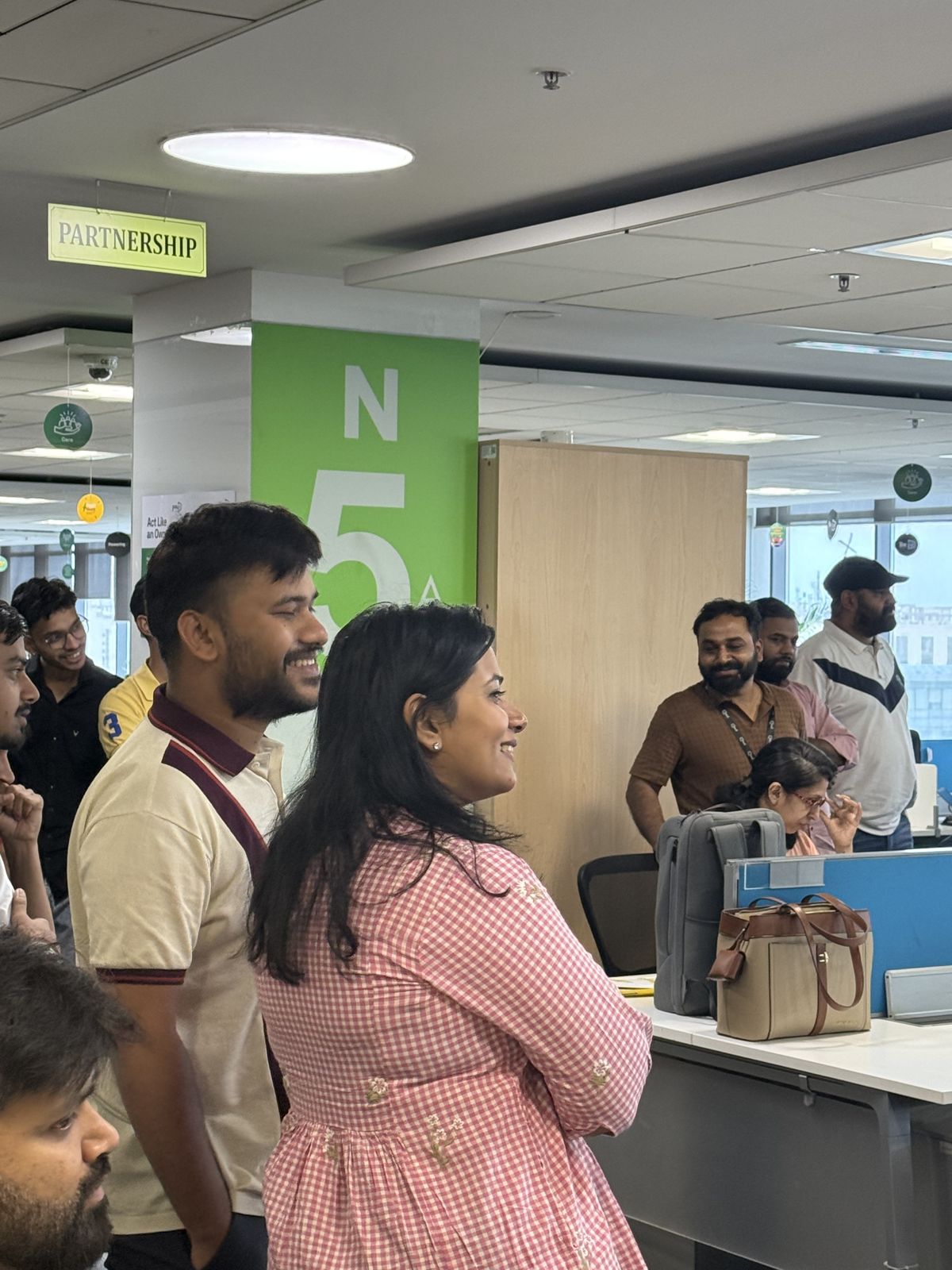
Team building activities vs applied theatre: what's the difference, and which do you need?

Search for a team building company in Gurgaon and you will be offered two things that look similar and are not.
One is an activity company. Treasure hunts, drum circles, escape rooms, resort offsites, cook-offs. A catalogue, a per-head price, a date in your calendar.
The other is an applied theatre workshop. Actors, a scene built around something that actually happens in your company, and a room that stops the scene and changes it.
Both are legitimate. They do different jobs, cost different amounts, and fail in different ways. Buying the wrong one is the most common mistake in this category, and it usually happens because the brief said "team building" when the problem was something else.
The short version
| Activity company | Applied theatre | |
|---|---|---|
| What happens | A structured game or experience | A scene from your workplace, played and then fixed |
| Built from | A catalogue | A conversation about your problem |
| Who runs it | Facilitators, event crew | Working actors |
| Group size | 20 to 500+ | 20 to 40 per room, or hundreds for a performance |
| Best for | Energy, morale, a team that has just formed | Behaviour that needs to change |
| Typical cost | Per head, published, from around ₹800 | Per day, quoted after a design call |
| Fails when | The problem was never about morale | The room wanted a fun day |
| You get | A good day and photographs | An uncomfortable twenty minutes people still quote |
When an activity company is the right call
Do not let anyone talk you out of this. An activity day is the correct purchase when:
- The team is new, or has just been restructured, and simply needs hours together
- Morale is low after a hard quarter and people need something that isn't work
- It's an annual celebration and the job is to mark the year
- The group is large and you need everyone included at a sensible cost per head
In India this part of the market is well served. The Thought Bulb publishes 153 activity pages and prices from ₹21,999. Trebound lists hundreds of resort venues for offsites. Team Builders India, based in Gurgaon, has over 800 Google reviews. engage4more covers Delhi NCR with per-head pricing.
If you need forty people to have a genuinely good day in a nice place, these companies do that well and they will quote you quickly.
When an activity day will not fix it
An activity day is the wrong purchase when the problem has a name:
- Two departments that don't talk to each other
- Managers who won't give honest feedback
- A value on the wall that nobody behaves like
- Junior people who stay silent in meetings with seniors
- A new policy that everyone nodded at and nobody follows
None of these is a morale problem. People already know what they should do. They are not doing it, in a specific situation, for reasons that feel reasonable at the time.
Rafting does not change that. You will have a lovely day and the same two departments will still not be talking on Monday.
What applied theatre actually is
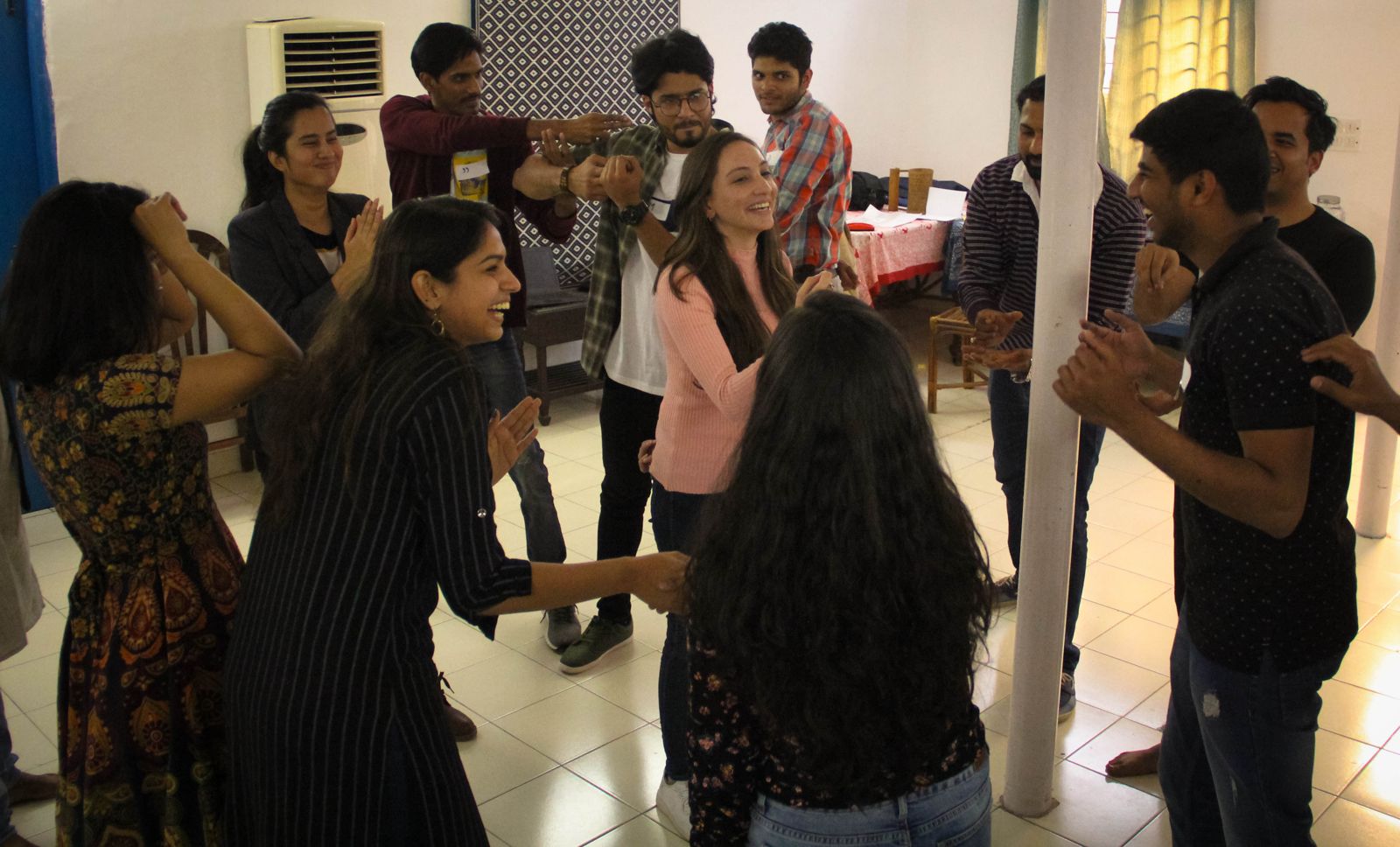
Not actors performing for you. Actors performing your situation, with your people in it.
A typical session has three parts.
The scene. Actors play out a situation drawn from your company — a handover that fails, a meeting where the one person with the crucial information says nothing. It is specific. People recognise it, usually with an uncomfortable laugh.
The intervention. The scene is played again, and anyone in the room can stop it, take a character's place, and try something different. This is forum theatre, developed by the Brazilian director Augusto Boal in the 1970s for exactly this purpose. The scene keeps failing until somebody in the room finds the move that works.
The debrief. Where the value is. What changed when she said it that way? What did it cost her? Would it work with your actual director?
The difference from role-play is that nobody has to perform. Professional actors carry the scene; participants step in when they have something to try. In most role-play exercises the least confident person in the room is asked to act, badly, in front of colleagues — which is why so many people dread it.
Applied theatre, role-play and improv
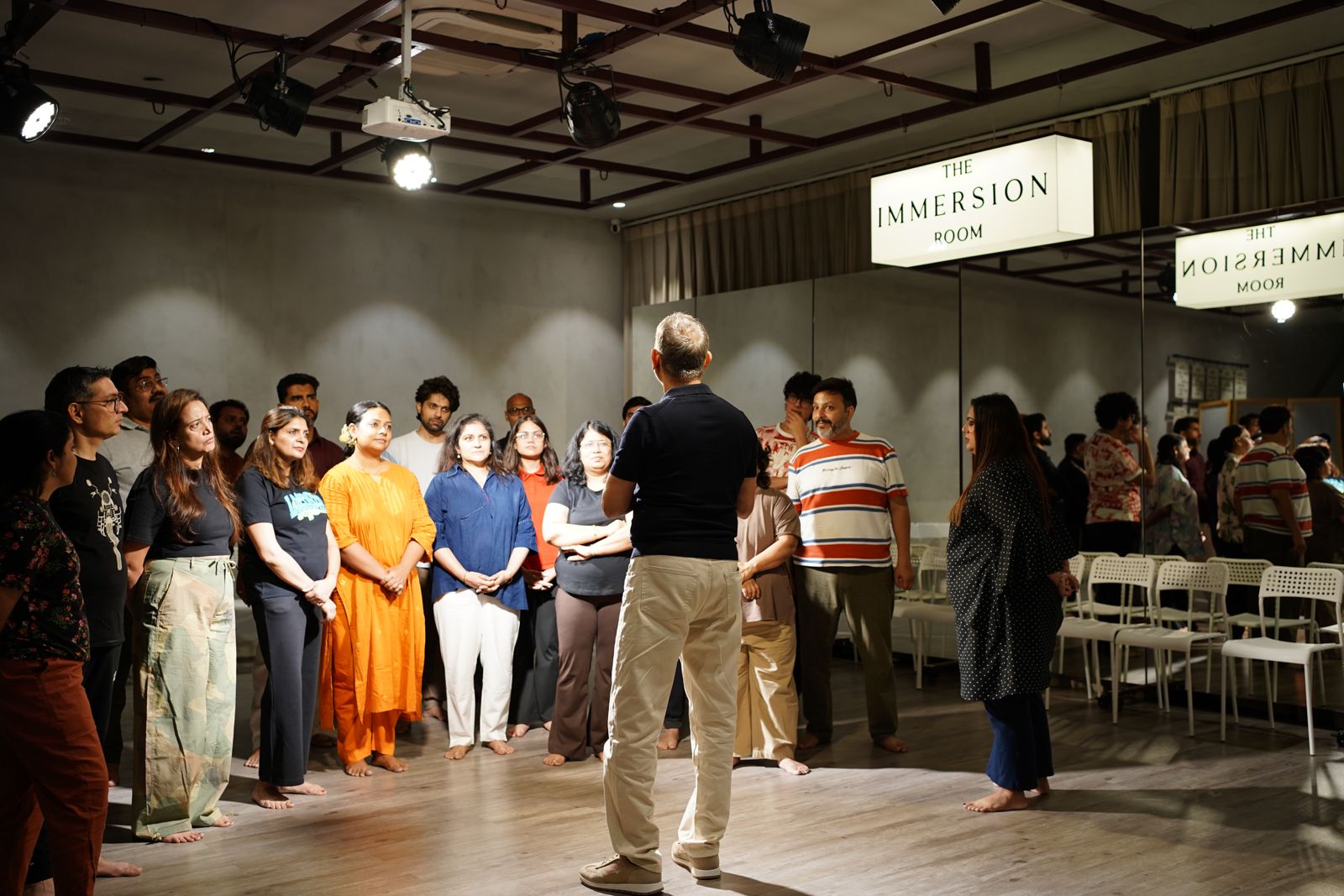
The three get used interchangeably and shouldn't be.
Role-play — participants act out a scenario with each other, usually from a script or brief. Cheap and common. Works for practising a known procedure. Suffers because the quality depends entirely on how willing the least comfortable person is.
Improv — unscripted comedy exercises, borrowed into corporate training for listening, "yes-and" and adaptability. Genuinely good for energy and for loosening a stiff room. It is a skills warm-up, not an intervention.
Applied theatre — trained actors perform a scene designed around your problem, and the room changes it. Costs more, takes longer to design, and is the only one of the three built to shift a specific behaviour.
Many providers combine them. Improv to open the room, applied theatre to do the work.
How to tell which you are being sold
Ask one question: "Where does the content come from?"
If the answer is a catalogue — "we have 60 activities, pick three" — it is an activity company. Useful, fast, usually cheaper.
If the answer is a conversation — "we'd need a call with you and two of your managers first" — it is applied theatre, or should be.
Two follow-ups worth asking either way:
"Who will be in the room on the day?" Names, and what they have done. The person who sells is frequently not the person who runs it.
"What did your last three sessions score, and how many people responded?" A score without a sample size tells you nothing. Most providers in this category publish no outcome data at all; none of the ones we checked did. So a provider who can answer quickly is already unusual.
The honest summary
If your team needs a good day, book an activity company. They are better at it than we are, they will quote you faster, and it will cost less.
If a specific behaviour needs to change, an activity day will not touch it, however good the day is.
The expensive mistake is not choosing wrong between them. It is buying the fun day, finding in March that nothing has changed, and concluding that none of this works.
Tamasha Entertainment is an applied-theatre company in Gurgaon. We build scenes from what is actually happening in your organisation, performed by working actors — team building, behaviour change, diversity and inclusion, and leadership sessions. Ask us for our feedback numbers: we give the number of responses with every score.