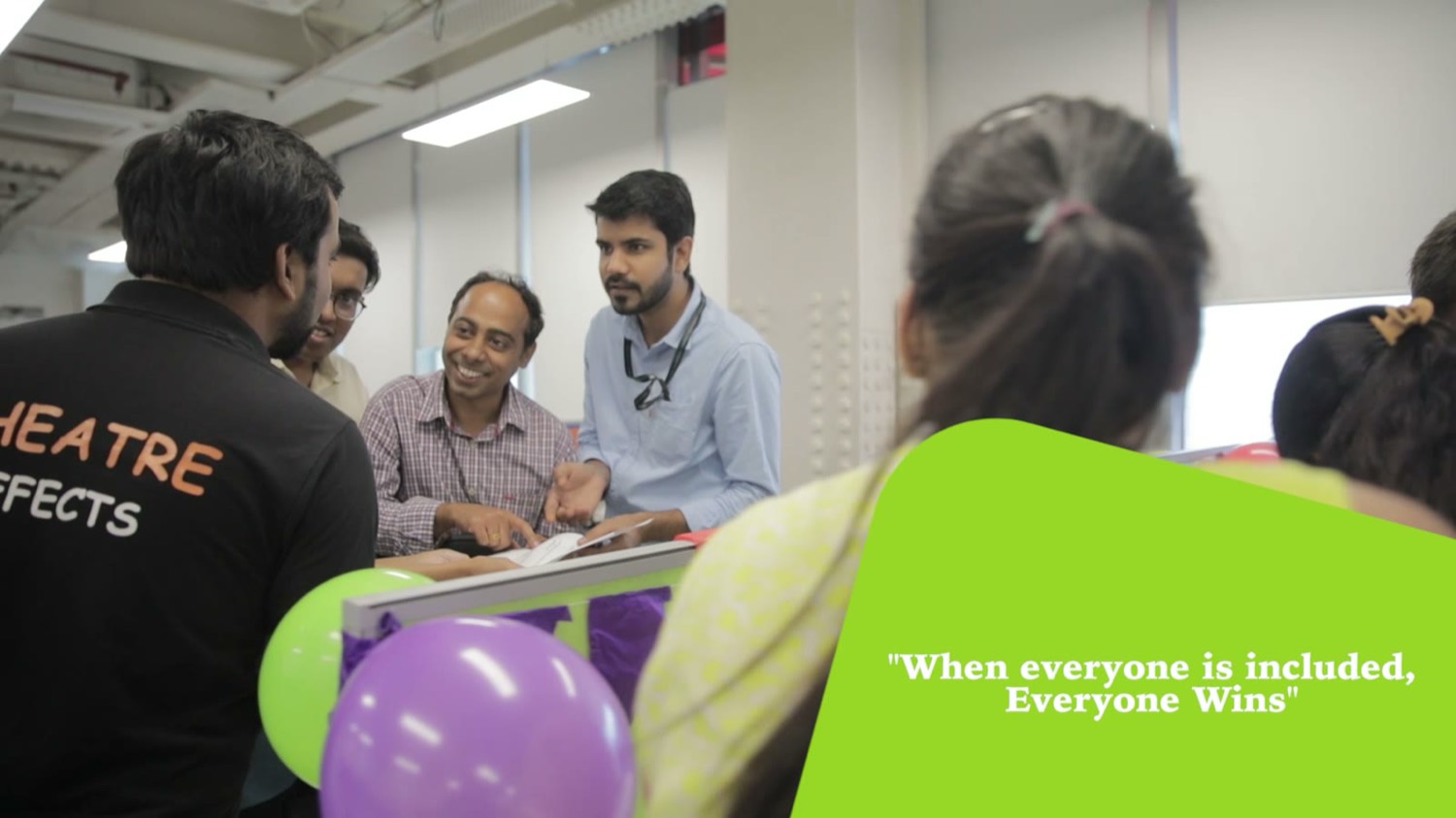
How do you turn a company behaviour into something people will actually watch?

A company does not hand you a culture. It hands you a word.
PayU has ten stated behaviours. They did not give us ten. They gave us one — Act Like an Owner — and asked what we could do with it.
We think that choice is the most useful thing in this whole engagement, and it was the client's instinct before it was ours. One behaviour, taken seriously, instead of a values deck covering ten. Nobody bought a culture programme. Somebody bought a behaviour.
This is the account of how it was built — the design decisions, where it was performed, what came back, and the part the numbers do not cover.
The problem with a word like ownership
Ownership is a noun. It can be printed, laminated, hung from the ceiling and recited in an all-hands, and it still has no observable shape. Nobody in the building can point at the instant ownership was or wasn't happening.
Which makes it unstageable. You cannot act a noun. An actor given the note "play ownership" has nothing to do with their hands.
So the first job on any behaviour brief is not writing. It is finding the moment where the word becomes visible — and that moment is almost never where the client is looking.
Find the person who pays for its absence
This is the rule we would give anyone trying to do this, and it is the one that made the PayU piece work.
The scene's protagonist is not the person missing the behaviour. It is the person absorbing its absence.
So the play does not open on someone failing to take ownership. It opens on a manager who cannot get through his day. Stakeholders calling. Upper management calling. A war room that will not end, an escalation that keeps coming back to him, because everyone under him has decided that the thing on the table is somebody else's thing.
Nobody watches a scene about their own failure. Everybody watches a scene about the damage it does to a person they recognise — and then does the arithmetic privately, which is the whole point. The recognition has to be theirs. If the scene performs the conclusion for them, you have made a training video.
The world without it, then the world with it
The piece is in two halves. The first is a workplace where nobody takes ownership and you watch what it costs. The second is the same workplace where ownership is simply what people do, and the work lands on time.
The order matters more than it looks. Open on the aspirational version and you have made a corporate film, and the room's arms stay folded. Open on things as they are and you earn the recognition laugh first — and that laugh buys you the permission to show the alternative. By the time the second half starts, the room has already admitted something.
Write it in the language they argue in
Standups, war rooms, escalation matrices, the sprint that slipped, let's take it offline, circling back on this. Both of us came out of corporate jobs before this, so the register is free to us — we are not researching how people in an office talk to each other, we are remembering it.
This is not a flourish. A scene in the wrong register is a scene about somebody else, and a room will watch it politely and forget it by lunch. It is the same reason the unconscious bias work at Marico was devised bilingually, in Hindi and English: that is how the moments being staged actually sound. Get the vocabulary wrong and you have staged a different company.
Why professional actors, and not facilitators
A punchline is a timing skill. It is not a personality trait and it cannot be read off a page by someone whose job is facilitation.
A facilitator performing a funny script gets a polite laugh. An actor gets the other kind — the one that comes a half-second too fast, from people who have just recognised their own Tuesday. That laugh is not decoration. It is the instrument. As we have written before, the loudest laugh in the room marks the most widely experienced behaviour in the building, which means casting is a measurement decision as much as an artistic one.
Perform it where the work happens
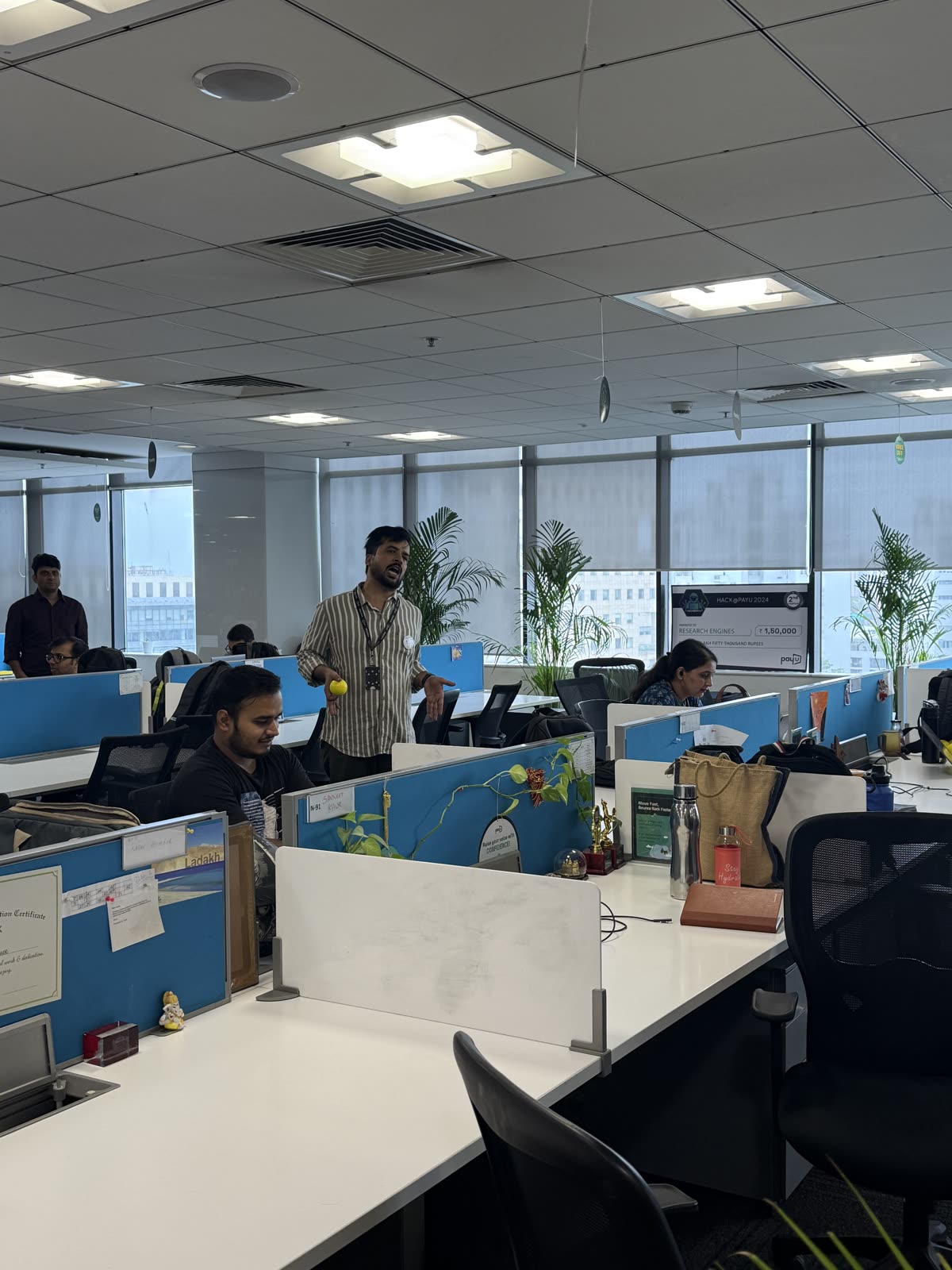
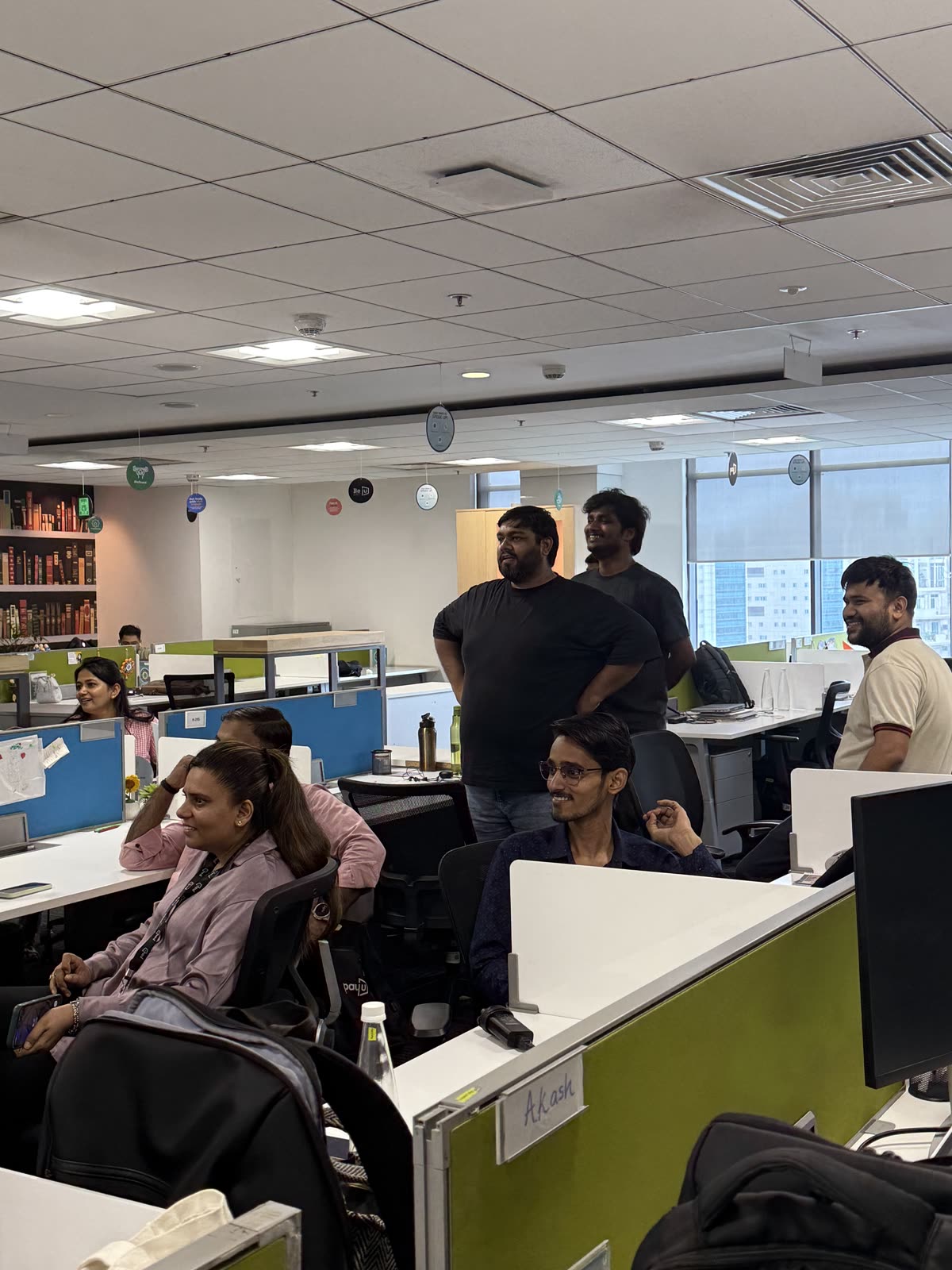
The last decision was where to put it, and we did not book a conference room. The play was performed as a nukkad natak — street theatre — in the bays, in the aisles between the desks, where the calls and the standups and the escalations actually happen. It was called It's Not My Job!
HR asked people for twenty to twenty-five minutes. Asked, not mandated. No calendar block, no mandatory invite, no attendance sheet.
Eight performances across three cities — Gurgaon, Bangalore and Mumbai — in January 2026. PayU had grown partly by acquisition, so there were several companies inside one company and one behaviour that had to mean the same thing in all of them.
The trade is real and worth stating plainly. Performing on the floor with a voluntary ask buys you attention you could never get from a mandatory session — nobody is resisting a thing they chose to turn their chair towards. What it costs you is reach. You get the people who walk past. Anyone recommending this, ourselves included, owes you a plan for the people who don't.
What came back
Every show ends with a thirty-second QR pulse on a phone — rating, understanding, appetite. Across the eight shows, 137 people answered:
- 4.78 out of 5 average rating
- 85.4% gave it five stars
- 97.1% said they understood the behaviour and felt confident applying it
- 99.3% wanted to see more sessions like it
The recurring free-text comment was "better than traditional training." The one we keep coming back to, though, is this:
"You should do this for all the PayU behaviours."
That line was written by an employee on a phone in January, unprompted, in a free-text box. It is the only piece of advocacy in this whole account that we did not write ourselves.
What these numbers do not say
They do not say that anyone took more ownership.
A 4.78 is a level 1 measure — did they like it. The 97.1% is closer to level 2, because it asks whether something was understood rather than enjoyed, and it is still self-reported by people who had just watched something they found funny. Neither of them is behaviour. Nothing in this dataset describes what a manager observed eight weeks later, and by the standard we set out in our own post on measurement, any provider claiming behaviour change without a 30-day manager check is claiming more than the evidence supports. That includes us, on this engagement.
The honest version is narrower: a voluntary audience, at their desks, paid attention to a behaviour for twenty minutes and could describe it afterwards. For a message that normally arrives as a slide in an onboarding deck, that is not nothing. It is also not a changed organisation.
Tamasha Entertainment builds behaviour-change theatre for corporate teams from Gurgaon — a behaviour at a time, performed where people sit. The PayU figures above are from a survey of 137 employees in January 2026. The four questions to ask any provider first are here.